
Table of Contents
Introduction
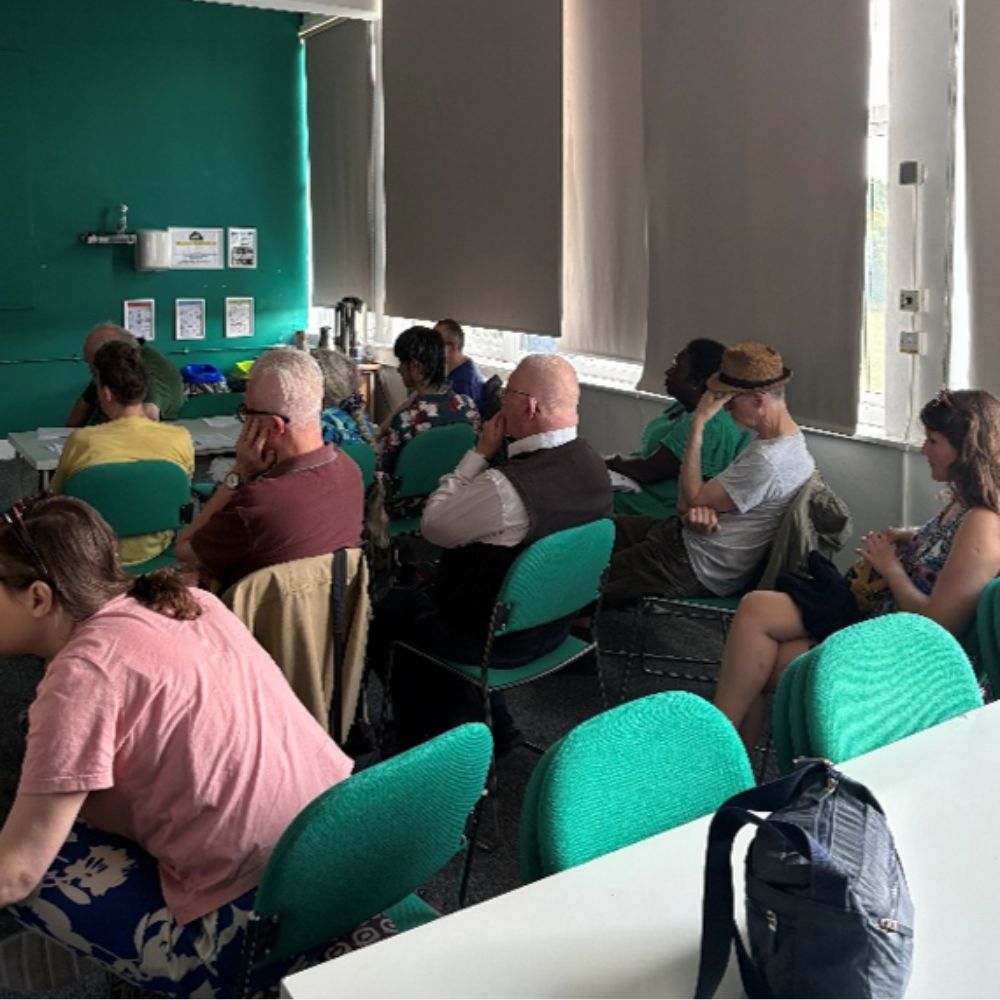
We had our second 2025 BDEF CIO members meeting in June.
It was in The Greenway Centre, Southmead. We are making sure that each of our four members meetings in 2025 are spread out across Bristol and are at different times of the day.
Our first was in South Bristol, this was in North Bristol, the next one will be in West/Central Bristol and our last one of the year will be in East Bristol at our new home in Easton Community Centre.
The focus of this forum was to look at ‘intersectionality in the Disabled people movement’, led by our trustee Devon.
Intersectionality is the way in which different types of discrimination people face are connected to and affect each other.
This could be based on gender, Disability, race, age and other identities or experiences.
BDEF CIO Updates
Megan and Dan, our staff members, led this discussion.
Megan talked about …
- BDEF’s office move to Easton Community Centre. Also, that once the office was organised, we would be running a community table for people to book out for free. There is a hope that this will be a space for connection, collaboration and support of grassroots Disabled people led movements.
- The recruitment of two new staff members. One is a Community Development worker and one is the permanent Senior Admin, Communications and Finance Admin role (Josh, in his temporary role, will be leaving us in August). We hope these new staff members will be around to meet everyone at the next Member Forum.
- BDEF had created a big funding application to Bristol Impact Fund. We are waiting to hear the outcome of this.
- Dan is moving ‘officially’ over to the Peer Support worker role that reflects the work he is already doing. Also (and hopefully for the last time) his email is changing to [email protected].
Dan talked about …
- The new program he is running at the Vassal Centre sessions on a Monday is going well. One hour is for the peer support session but then the second hour, speakers have been invited to speak on topics such as Climate and Disability, mental health support and benefits support.
- The start of a new peer support session at 1pm at Easton Community Centre.
There will be a questionnaire coming out to current attendees to find out how they feel about the sessions so far and which speakers he could invite.
Introduction to Intersectionality
Gigi El-Halaby, one of our trustees, led on an introduction to intersectionality in this forum.
Gigi talked about the history of social movements such as feminism, civil rights, LGBT+ liberation, and of course, the Disability rights movement.
They also highlighted that while these movements gained momentum, they often struggled to reflect the full diversity within their own communities. And that’s where intersectionality comes in.
The origin of where the word ‘intersectionality’ came from was by Kimberlé Crenshaw, a Black American civil rights scholar, in 1989.
Gigi talked about that oppression doesn’t happen one identity at a time, and neither should our activism or our thinking.
The importance of looking at intersectionality in the Disabled people movement was that Disability is not experienced in isolation.
A Disabled person may also be a migrant, a queer person, a carer, a working-class person, a Muslim, or a Black woman — these overlapping identities and experiences shape how they face barriers and receive support.
Gigi talked about a lot of examples of where this happens. One example was that during the COVID-19 pandemic, racially minoritised Disabled people were more likely to be hospitalised and passed away, and less likely to receive adequate care. They also faced more challenges with shielding policies and healthcare communication.
They said that ‘intersectionality’ helps us to ask better questions …
- Are we listening to those at the sharpest end of inequality — or only those who are easiest to reach?
- Are we designing funding criteria, services, and policies that reflect real-world diversity?
- Are we making sure everyone feels welcome in the communities we are creating?
It also challenges us to build solidarity across differences. That might mean …
- Funding grassroots groups led by Black Disabled people, LGBTQ+ Disabled people, or Disabled migrants.
- Making our spaces culturally as well as physically accessible.
Gigi finished off by saying that our movements are only as strong as the most marginalised members. If we want to build a truly inclusive Disabled people’s movement, intersectionality isn’t optional — it’s essential.
What does intersectionality mean to you (our members)?
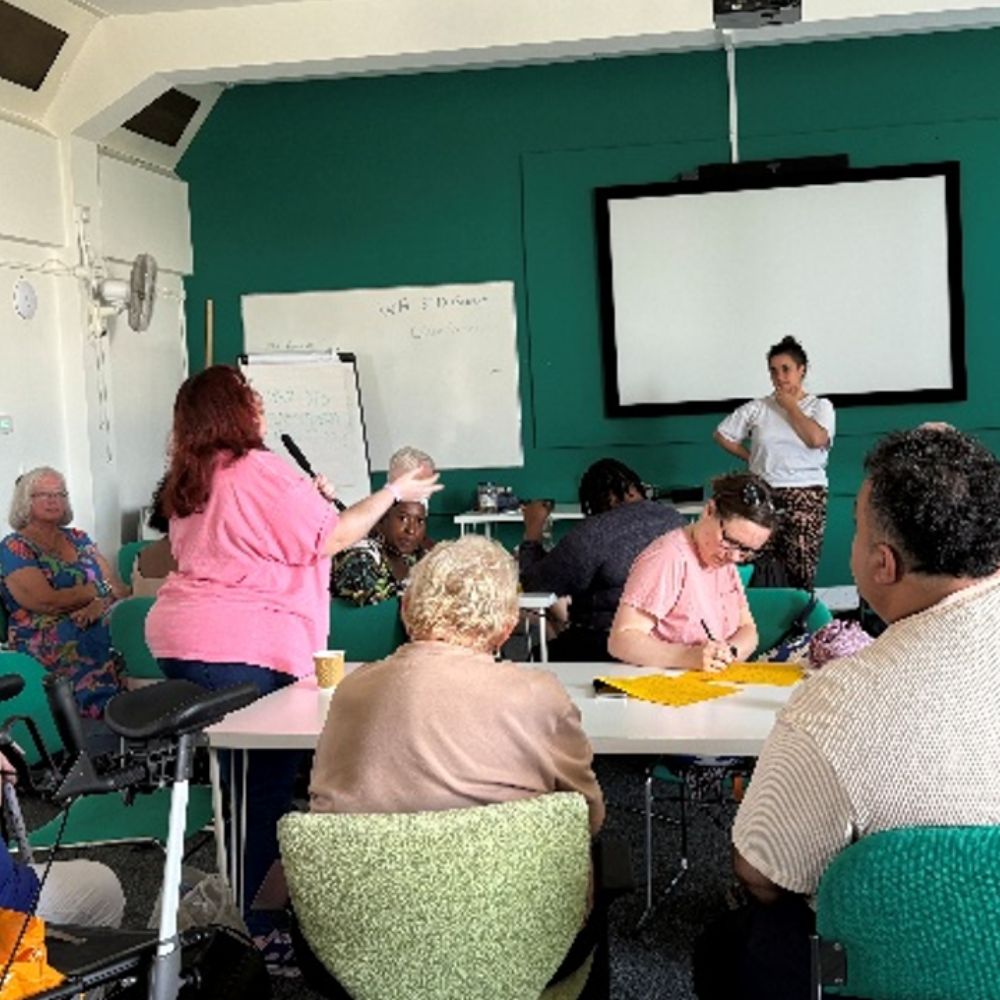
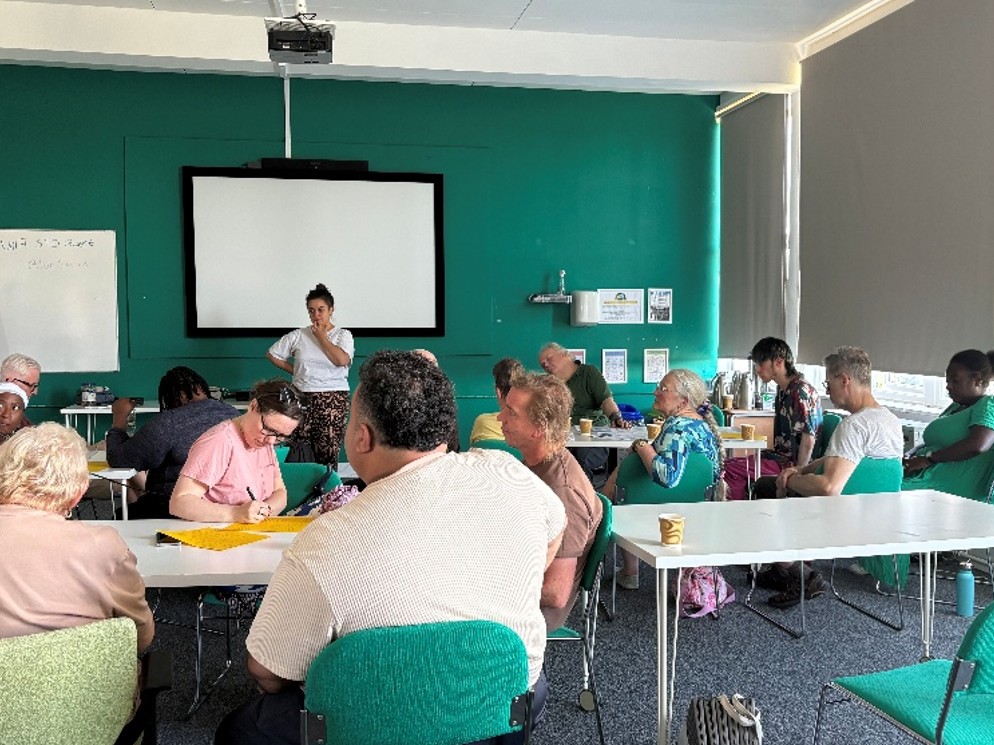
We asked our members to then have a think about what ‘intersectionality’ might mean to them.
Each table split up and discussed this topic.
The members discussed that …
- There is a need to have good, honest and open conversations.
- Class is an important issue which is often overlooked.
- We are all human beings and should treat each other with fairness and acknowledge and accept how people identify themselves.
- Some people don’t want to identify as Disabled which can be a barrier.
- Not everyone is able to access the same support such as refugees or those with uncertain visa statuses.
- People don’t always know if they’re being discriminated against or if they are and they have multiply marginalised identity, what kind of discrimination they are facing (such as Disablism, racism or misogyny).
- The Disabled people movement years ago was dominated by white men with physical or sensory impairments which wasn’t representative of the whole Disabled people community.
- People are excluded if language is used that isn’t inclusive.
- People with lived experience are the experts.
- There is a need to learning from the community.
- There is a need to look at how intersectionality impacts on a person’s understanding of themselves (not just how other people see us).
- Intersectionality isn’t just identity it’s experiences as well such as visa status or experiences of violence.
- It is all a learning process, call people in and explain context and background makes things more effective.
This was a very honest, inclusive and wide ranging discussion which we thank our members for having.
Without this conversation, things will never change.
Where do we go from here?
There was then an ask about how BDEF can use intersectionality to build change.
Megan, BDEF’s Director, then stepped in.
It was explained that this will be the first step in the conversation.
They said that there was a need to make sure we were taking this conversation at a pace which meant everyone could be equal in their understanding of ‘intersectionality’.
Megan said that this discussion will continue and be a core part of BDEF’s work moving forward.
Message from BDEF CIO staff and trustees
We finished off the meeting with a thank you all for your participation and dedication to making BDEF a stronger, more connected and inclusive community.
Our next members meeting will be in September 2025.
Stay tuned and stay involved!