


Activists' Stories
The interviews
Many activists involved in the Disabled movement in Bristol were invited to take part in oral history interviews led by the young people’s research group. While we were not able to interview every relevant figure that we wanted to, we have managed to record a large amount of otherwise unrecorded history.
Alun Davies
Alun became active in the Disabled people’s movement in 1986 when he joined the Management Committee of the Birmingham Disability Rights group, and later worked as a Disability Awareness trainer in Birmingham. In 1989, he moved to Warwickshire where he worked with others to set up the Warwickshire Coalition of Disabled People. He was working within the trade union NALGO (later UNISON) on Disabled people’s issues. Alun to Bristol in 1991 to work for the Avon Coalition of Disabled People as a Project Worker. His role was to set up a Centre for Integrated Living, which became known as WECIL, and which opened in 1995. From 1994-97, Alun was the WECIL Housing Project Worker, and from 1998-2003 he was the Coordinator, and later the Chair, of the West of England Coalition of Disabled People (WECODP). He was also an elected member of the Avon County Council Disability Equality Advisory Sub-committee and of the Disability Advisory Sub-Committee of Bristol City Council. Alun worked nationally as a member of the Disability Committee of the trade union UNISON from 1991-1994, and on the management committee of the British Council of Disabled People from 2000-2001. In 2007 he co-chaired a DWP working group tasked to develop the structure of a national forum for Disabled People’s Organisations and from 2008-2010 was a member of the Disability Committee of the Equalities and Human Rights Commission. He is now appointed as the Chair of Bristol’s Disability Equality Commission.
Ian Popperwell
Ian was one of the founder members, and on the Management Committee of the Avon Coalition of Disabled People and was on its Management Committee through its early years. In the mid-1980s, he worked for voluntary sector mental health and homelessness organisations in Coventry, and qualified as a social worker in 1988. Soon after, his focus moved away from work with individuals to policy development, particularly in Disabled people’s employment and then to Equalities Officer roles in adult social care through the 1990s. After leading projects on Disabled people’s employment and transition for young people with ‘special educational needs’, he became a Commissioning Manager for mental health in Bristol City Council Adult Social Care in 2003. He now works in a similar mental health commissioning role in the NHS Bristol, North Somerset and South Gloucestershire Clinical Commissioning Group.

Roger Berry
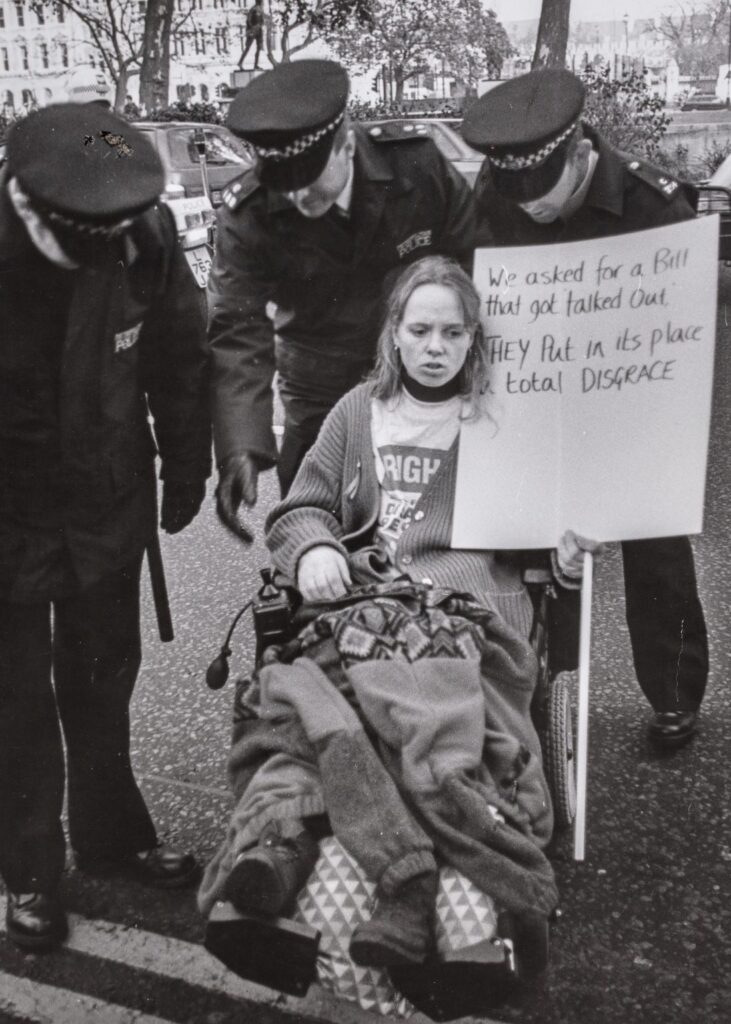
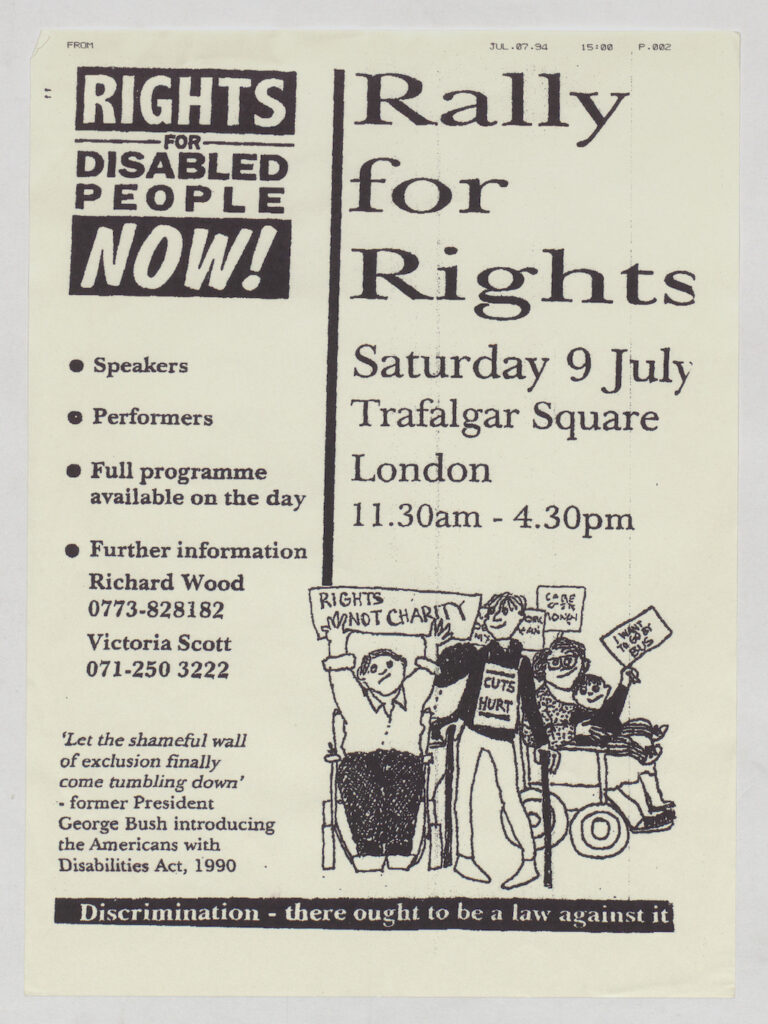
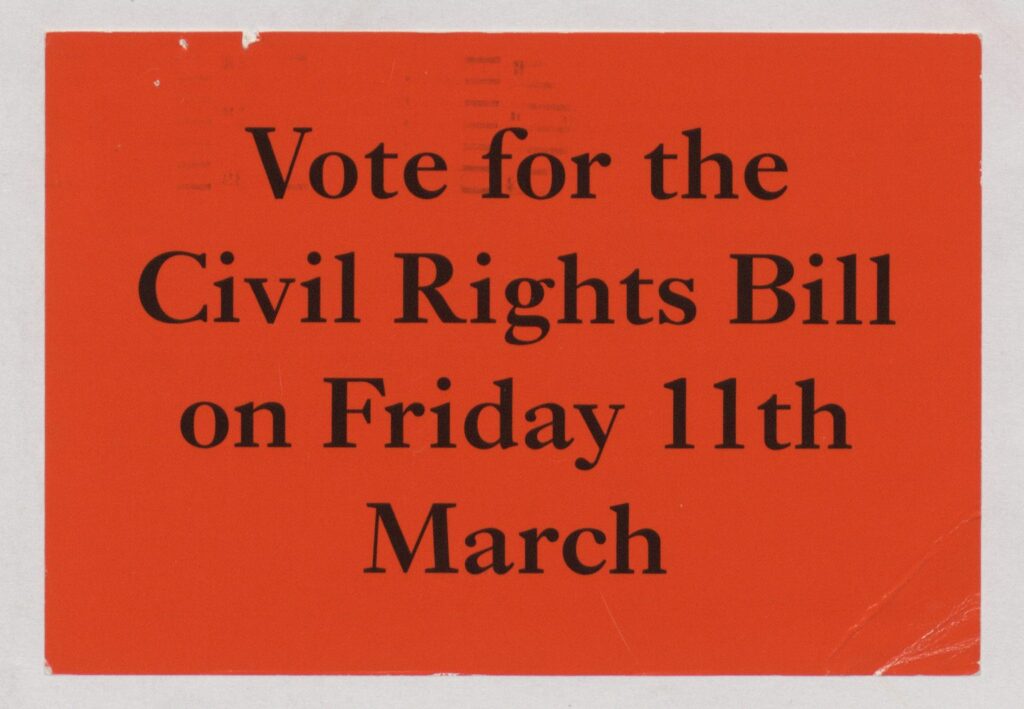
After serving as an Avon County Councillor, Roger was elected as the MP for Kingswood, Bristol, in 1992. Early on in his parliamentary career, Roger became known as a Disability Rights campaigner, and was Secretary and Co-Chair of the All Party Parliamentary Disability Group. A champion of Disabled people’s rights, Roger introduced a Civil Rights (Disabled Persons) Bill in Parliament in 1993. This far-reaching piece of legislation was watered down when the Government introduced the Disability Discrimination Act (1995). However, the intentions of the Civil Rights Bill became law in the Equality Act 2010. Roger left Parliament in 2010. He was a founding trustee of the pan-Disability charity Disability Rights UK, serving until 2020. He is a trustee of Bristol Law Centre, having been its chair for five years.
Gordon Richardson
Gordon is the former chair and treasurer for Bristol Disability Equality Forum and a committee member and Disability representative on the Bristol Walking Alliance. After a career as a Chartered Accountant and senior financial advisor with a major IFA firm in Bristol, he took early retirement and has spent the last 20 years doing charitable and voluntary work, including setting up the Vassall Centre in Fishponds to provide barrier free office premises for organisations of and for Disabled people and as a trustee of Designability in Bath who design specialist equipment for Disabled people including the Wizzybug powered wheelchair for children under 5 years old. He is also National Chairman and Chair of the Bristol Branch of the British Polio Fellowship and Treasurer of the Bristol West Diabetes Support Group.
Laura Welti
Laura became a Disability activist in the lead up to the Disability Discrimination Act 1995, when she was a freelance equalities consultant. Having had a hidden impairment since her late teens/early twenties, Laura acquired multiple impairments and conditions about three years later and, by the time she was able to work again, she had determined that she needed to be more involved at the heart of the Disability movement in Bristol. This led to a job at WECIL and then, after a further bout of being unable to work, she joined Bristol Disability Equality Forum, as its Development Worker (and then Manager) in 2003. She has been with the Forum ever since. In this time Laura has been very active in the movement campaigning on a wide range of issues experienced by Disabled people, and as a Disability Equality trainer. She was manager until 2023, unfortunately passing away in 2024.
Hilary Sutherland
Hilary Sutherland is a dedicated advocate for Sign Language and Sign Bilingualism in Deaf Education. She is an experienced researcher within the field of Deaf education, and with families with Deaf children. She co-authored Deaf Ability Not Disability aimed at families with newly diagnosed Deaf children. She has produced numerous resources and written many published articles about Deaf children and Deaf people. Hilary’s PhD, Sign Bilingualism Through the Eyes of a Deaf child, looked at the experiences of young Deaf children growing up with English and British Sign Language. Hilary has worked in a number of universities throughout England, and has been a trustee of several Deaf-led organisations, including Bristol’s Centre for Deaf People, the Deaf Studies Trust, the Richard Magill Fund and Elmfield School for Deaf Children.
Ruth Pickersgill
Ruth was originally a teacher but after she became Disabled, she felt the role was too physically demanding and there was no legislation at that time to require employers to make ‘reasonable adjustments’. She therefore moved into community work, and did a training course which opened her eyes about equality and discrimination. She then joined Oxfam in 1980 where she became the Staff Equality Rep. on their Trustee Board. Coming to understand more about Disability equality, she became incensed by the lack of support Disabled volunteers were given. She decided to refocus her career on Disability equality and was successful in gaining a job as Director of Lambeth Accord, a Disabled people run organisation in Brixton (London) in 1984. In this job, she met many inspirational leaders in the Disabled People’s movement and came to understand the importance of the social model, and to attend BCODP (British Council of Organisations of Disabled People) meetings. Ruth returned to Bristol in 1988 and became the first Equal Opportunities Officer for Avon Council, then Principal Disability Equality Officer. She also became involved in the Steering Group to establish a Bristol Centre for Integrated Living and was one of the founder members of the Avon Coalition of Disabled People which was launched in 1989. She was on the Management Committee of the Coalition and was then employed as their Co-ordinator. When WECIL (the West of England Centre for Integrated Living) was launched in 1995, Ruth was employed as the first Director. She left in 2000 and went to work for Bristol City Council as Inclusion Manager (bringing Disabled children into mainstream schools) and then as the Equalities Manager for Education. She then decided she was happier working with young people and was appointed a senior leader in FE colleges in Leicester and Bristol until she retired (always with equality as part of her role). She was awarded an MBE for her work on equality in Further Education in 2010. She then became a local councillor for the Easton Ward of Bristol from 2016 to 2021, and in a voluntary role, she has been Chair of Leicestershire Centre for Integrated Living and more recently Chair of WECIL.DD
Help us by donating
We now need to grow our income from donations, as well as from grants. This would enable us to do more of the work our members want us to be doing that it is difficult to get funding for. So, please do think about supporting us and visit our Donate page.
Liz Crow
Liz’s interest in Disability started in her teens, at a point when she didn’t know to call herself a Disabled person. When aged 20, she met two politicised Disabled women and was introduced to the Social Model, she became political. She started working as a Disability awareness/equality trainer and attended the initial meeting for the Avon Coalition of Disabled People in 1999. Moving to London soon after, she got involved with the Direct Action Network and London Disability Arts Forum (LDAF) – and more. Liz has always been involved in arts as a political medium. She turned to film in the late 1990s, and performance from 2008. She has worked on innovative approaches to BSL, captioning and audio description in film. Her production company is: http://www.roaring-girl.com/ Liz has recently completed a PhD about methodologies of activism.
Penny Germon
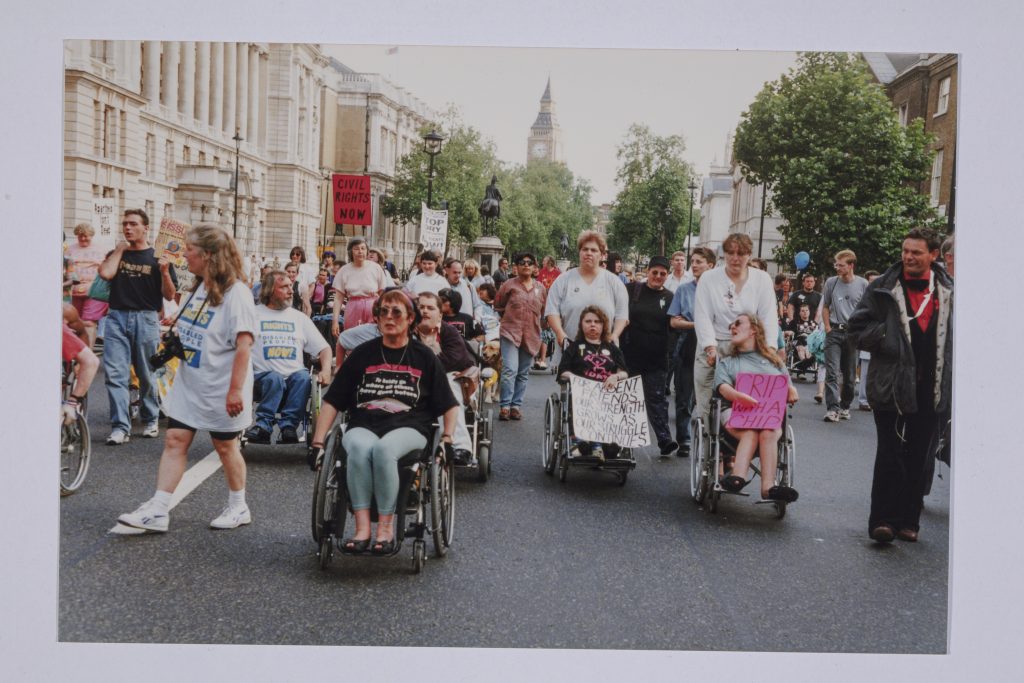
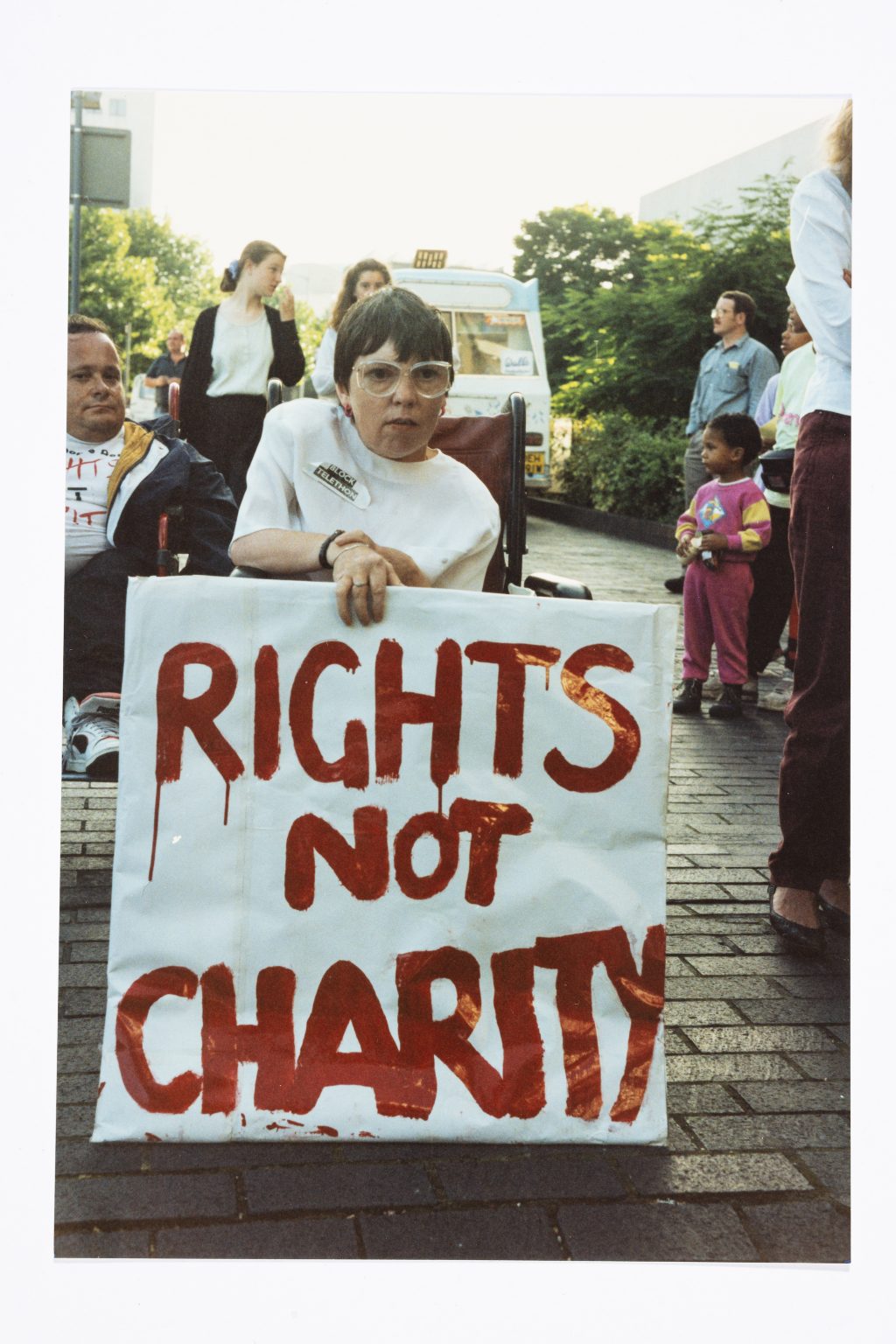
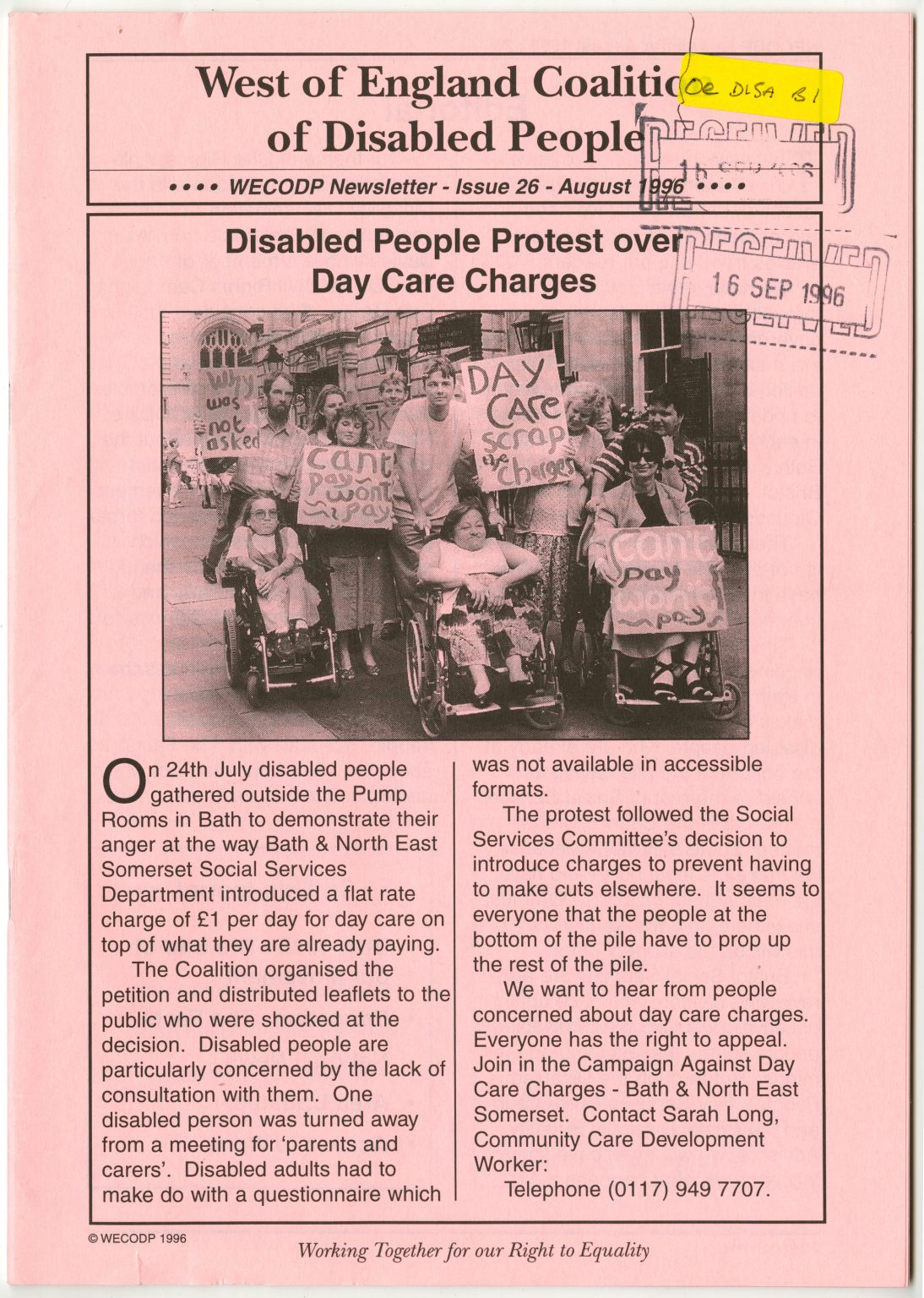
Penny’s road to activism started when she wrote a letter to Venue magazine about an employment fair they promoted which was held at the Watershed – then completely inaccessible. She joined the management committee of the Avon Coalition of Disabled People at the start, taking responsibly for the newsletter. Penny discovered the power of collective action, taking part in Block Telethon rallies and ‘catching’ buses with the Direct Action Network. In 1991 she was appointed as the Coalition’s Development Worker (the first paid position) to ‘facilitate the empowerment and self determination of Disabled people in the County of Avon’. In 1995 she became the Coordinator. Penny left the Coalition to take up a new role as Groups Development Manager for the British Council of Organisations of Disabled People (BCODP) the umbrella body for organisations run and controlled by Disabled people. Penny focused on building an inclusive movement working with young, Black and lesbian and gay Disabled people and supporting the development and influence of organisations across the country. Penny is now Head of Service for Neighbourhoods & Communities for Bristol City Council where she strives to put justice and equity at the heart of the city.
Meryl Gaskell
Meryl was the Director of Bristol Dial-a-Ride from June 1993 to May 2007 during which time the service expanded from covering 3 wards of Bristol to a city-wide service. She then became the Director of the Disabled Living Centre from June 2007 to June 2014. Both Dial-A-Ride and the Disabled Living Centre were two of the early organisations in the UK which were managed by Disabled people and which delivered practical services which enabled independence. Meryl was a Co-Chair of the Bristol Disability Equality Forum, then part of Bristol City Council, in the early 2000’s, with Ruth Pickersgill. In this role, she had a wider remit which included promoting accessible public spaces, transport and education.
Paul Sullivan
Paul has been active in promoting the inclusion of visually impaired people and other Disabled people in education, culture and other areas of life since the 1980’s. His involvement with the Disabled people’s movement began when he got a job in what was then called the Disabilities Unit at Bristol University in 1993 (later it became the Disability Unit and later still the Centre for Access and Communication Studies). At the university he supported the inclusion of Social Model thinking in the training of medical students and social work students. He also provided training on access and inclusion to external organisations, such as local authorities and cultural organisations including English Heritage. In 2006 the university closed this department and Paul got a job with Bristol City Council’s Museum Service, helping with the development of M Shed. Working with the Museum Service’s Learning and Communities teams, he organised described tours of exhibitions for visually impaired people and was instrumental in getting audio guides created for some of the galleries. In the mid 1990’s, he also became involved with Bristol Royal Society for the Blind, first as a trustee, then as Vice-Chair and Chair. Following RNIB’s decision to sell their Bedminster building in 2017, he led a campaign for the RNIB to provide an alternative space for community use. For a while it looked like this would be achieved through a partnership between RNIB, Guide Dogs and the Thomas Pocklington Trust, but sadly that didn’t happen in the end.
Paul Sullivan
Paul has been active in promoting the inclusion of visually impaired people and other Disabled people in education, culture and other areas of life since the 1980’s. His involvement with the Disabled People’s Movement began when he got a job in what was then called the Disabilities Unit at Bristol University in 1993 (later it became the Disability Unit and later still the Centre for Access and Communication Studies). At the university he supported the inclusion of Social Model thinking in the training of medical students and social work students. He also provided training on access and inclusion to external organisations, such as local authorities and cultural organisations including English Heritage. In 2006 the university closed this department and Paul got a job with Bristol City Council’s Museum Service, helping with the development of M Shed. Working with the Museum Service’s Learning and Communities teams, he organised described tours of exhibitions for visually impaired people and was instrumental in getting audio guides created for some of the galleries. In the mid 1990’s, he also became involved with Bristol Royal Society for the Blind, first as a trustee, then as Vice-Chair and Chair. Following RNIB’s decision to sell their Bedminster building in 2017, he led a campaign for the RNIB to provide an alternative space for community use. For a while it looked like this would be achieved through a partnership between RNIB, Guide Dogs and the Thomas Pocklington Trust, but sadly that didn’t happen in the end.
David Mendelsohn
David was a member of the Avon Coalition of Disabled People.
Will Bee
Will became involved with the National Bureau for Handicapped Students in about 1979 while studying at Sheffield University. After university he worked for the Greater London Association for Disabled People (1983-87 towards the end of this period it became of Disabled People). His work for GLAD included chairing Voluntary Organisations for Anti-Discrimination Legislation, the campaign group of disability charities which became Rights Now. In 1990, he moved to Bristol to be Coordinator of Barton Hill Settlement and from 1995-2000, he worked for the Bristol Regeneration Partnership. He was a member of WECODP. In 2000 Will returned to Disability work as the Wales Director of the Disability Rights Commission, a post he held until the Commission’s abolition in 2007. In this role, he was the lead Director on transport issues, and has kept up that interest becoming a member of the Disabled Person’s Transport Advisory Committee in 2008 and continuing to this day.