Introduction
The Bristol Disability Equality Forum (BDEF) stands as a Disabled-led organisation committed to dismantling the systemic barriers that hinder Disabled people in Bristol from fully participating in society. Our approach is rooted in the lived experiences of Disabled individuals, ensuring that their voices are central to the development and implementation of solutions.
Our Theory of Change is structured around three core pillars: Community Development, Peer Support, and Voice and Influence. Through these pillars we aim to foster a cohesive and empowered Disabled community in Bristol. This aligns with the objectives of the Bristol Impact Fund (BIF), which seeks to:
- Increase resilience
- Enable social action
- Reduce disadvantage and inequality
- Improve wellbeing
By focusing on these areas, BDEF contributes to the broader goal of building a more inclusive and equitable Bristol.
The problem BDEF is solving
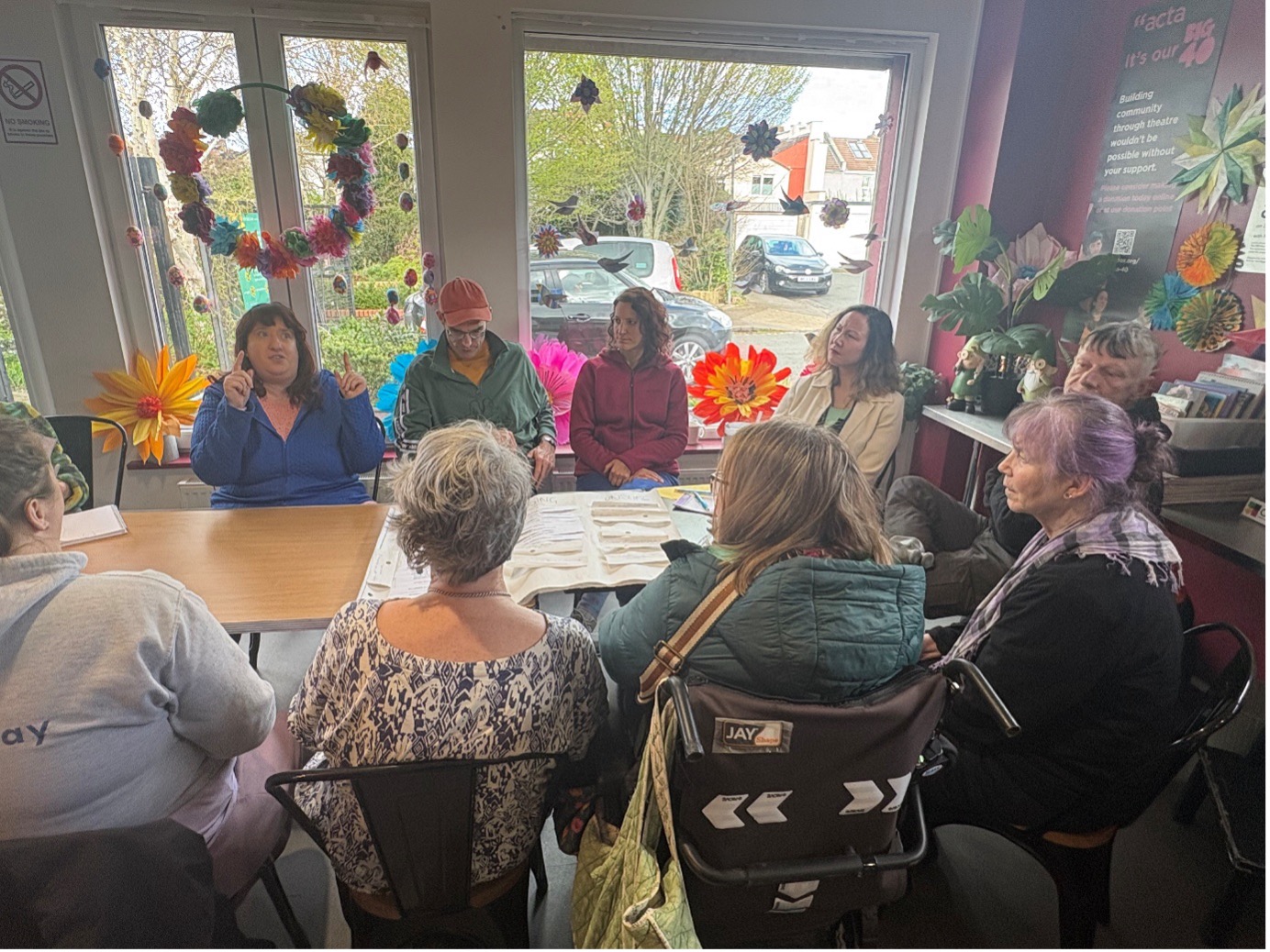
Bristol Disability Equality Forum (BDEF) exists to tackle the structural, cultural and systemic inaccessibility faced by Disabled people across Bristol. In a workshop with 11 members, trustees, and staff, participants clearly articulated that Disabled people in Bristol live in a society that is often not designed with them in mind. The result is exclusion across financial, cultural and mental health dimensions.
Financial barriers
Workshop participants highlighted the following issues affecting the financial wellbeing of Disabled people in Bristol:
- Reductions in benefits such as Personal Independence Payment (PIP) and Universal Credit.
- A shortage of accessible and inclusive employment opportunities.
- A lack of legislative enforcement to ensure accessibility in workplaces.
- Additional costs for support such as taxis, home help, adaptations, care and accessible housing.
- Barriers to accessing financial services, including inaccessible buildings, digital exclusion and discriminatory practices.
Supporting data
According to the Joseph Rowntree Foundation (2023), nearly half of people in poverty in the UK are either Disabled themselves or live with a Disabled person.
The Scope Disability Price Tag Report (2023) estimates that Disabled households face average extra costs of £975 per month.
Employment rates for Disabled people in the UK remain nearly 30 percentage points lower than for non-Disabled people (ONS, 2023).
Cultural Inaccessibility and Social Exclusion
Participants described widespread cultural exclusion where:
Disabled people’s needs are treated as an afterthought — addressed reactively rather than built into systems from the start.
This can be seen in education, housing, transport, recruitment, council and development projects and town planning.
Disabled people often remain invisible: many stay at home or do not disclose hidden disabilities, which contributes to underrepresentation and public misunderstanding of the size and presence of the Disabled community.
The Disabled people’s movement has regressed over the past 15 years with decreasing visibility, cohesion and policy focus.
Disability equality training is no longer mandatory, resulting in a population less informed than 15 years ago about Disabled people’s rights and the social model of disability.
There is fragmentation within the community, often forming around impairment-specific groups rather than uniting under shared experiences and rights.
Stigma continues to surround identification as Disabled.
Disability often ranks lowest in the hierarchy of Equality, Diversity and Inclusion (EDI) policies.
Lived expertise is regularly exploited without fair monetary compensation.
Many Disabled people feel voiceless and powerless.
Accessible community spaces where Disabled people can gather are severely lacking.
Representation of Disabled people across leadership and decision-making spaces is minimal.
Intersectionality and diversity within the Disabled community are not being adequately addressed.
Supporting data
The Equality and Human Rights Commission (EHRC, 2022) highlights persistent discrimination in education, housing, and healthcare.
Disability Rights UK and the Social Metrics Commission both report that Disabled people are underrepresented in public life, face high levels of social isolation, and are often treated as “service users” rather than experts by experience.
Mental Health crisis
The workshop also identified the disproportionate mental health burden faced by Bristol’s Disabled population:
- There are significantly high rates of co-morbid mental health conditions within the Disabled community.
- Disabled people in Bristol experience an epidemic of isolation-based hardship.
- Many have internalised Disablism, making it difficult to identify discrimination or articulate a need for change.
Supporting data
The Mental Health Foundation (2021) reports that 4 in 10 Disabled adults experience depression or anxiety, more than double the rate for non-Disabled adults.
Isolation and lack of belonging are strongly associated with poorer health outcomes, particularly among people experiencing marginalisation or exclusion (ONS, 2022).
Who's involved in making the change
The work of Bristol Disability Equality Forum (BDEF) is deeply rooted in the local context. It is led by and for Disabled people in Bristol and its surrounding areas. The following individuals, groups, and institutions are essential to driving the change:
- BDEF Members – The core of the movement, providing lived expertise, leadership, and direction.
- Disabled People across Bristol and the surrounding areas – The community at the heart of this work.
- Organisations, businesses, and establishments in Bristol – Including employers, service providers, cultural venues, and more, all of which have a role in creating inclusive environments.
- Bristol City Council – A key public sector partner, whose strategies and services directly impact Disabled people’s lives.
- Ally Businesses and Individuals – Those who recognise their role in supporting the rights and inclusion of Disabled people.
BDEF defines Allies as individuals or organisations who actively commit to learning from Disabled people, taking action to dismantle barriers, amplifying Disabled voices and using their power or resources to make lasting change. - West of England Combined Authority (WECA) – Especially relevant for regional policy and transport planning.
- Other Disabled People’s Organisations (DPOs) – Working in collaboration for a stronger collective voice and shared agenda.
- Other Equalities Groups in Bristol – To ensure intersectional approaches to policy, practice, and community work.
- Carers, friends, and neighbours – Informal supporters who are part of the everyday lives of Disabled people and part of the wider network of change.
The impact BDEF wants to have
BDEF’s long-term impact will be realised through three key pillars: Community Development, Peer Support, and Voice and Influence.
Community Development
A revitalised and united Disabled People’s Movement in Bristol, shifting from fragmented or individual struggles to a collective force for change.
A thriving community hub where Disabled people can connect, organise and be represented – with BDEF as a visible and active centre for local life.
Disabled people are celebrated, supported, and valued as integral to Bristol’s social, cultural and economic fabric.
Ambition is reignited – Disabled people in Bristol feel confident to pursue personal, professional, and creative aspirations.
People move out of survival mode and into environments where they can truly thrive.
Peer support
A strong, accessible, and consistent peer support network across the city that offers solidarity, wellbeing support and space for shared experiences.
A community where identifying as Disabled is not stigmatised but embraced, with opportunities to build confidence, identity and leadership.
Spaces for Allies are clearly identified and understood – including who Allies are, where they gather, and how they can meaningfully contribute.
Voice and influence
Policy makers, public services, and designers co-create policies, services and environments with Disabled people rather than for them.
Bristol’s DPOs collaborate and work together on shared challenges, priorities and opportunities.
Disabled people’s voices are actively sought and paid for, recognising lived expertise as valuable and necessary.
BDEF becomes known for its solution-focused approach, offering pragmatic, evidence-based alternatives rather than being seen as adversarial.
Politicians and decision-makers take BDEF seriously, regularly engaging with the organisation and its members to shape a more inclusive city.
BDEF's unique solution
BDEF’s strength lies in being of the Disabled community, not just for it. We are led by Disabled people and committed to co-producing everything we do with our members. We don’t speak on behalf of people — we create the space and support for Disabled people in Bristol to speak for themselves, to each other, and to those in power.
What makes BDEF’s approach unique is our combination of:
- Peer-led structures: We prioritise lived experience and make space for Disabled people to lead conversations, shape priorities and hold decision-makers accountable.
- Community-first mindset: We do not operate as a traditional service provider. Our focus is on building relationships, connections, and solidarity between Disabled people in Bristol, reducing isolation and increasing collective strength.
- Flexible, accessible communications: From newsletters and blasts to forums and meetings, we use multiple channels to reach people how and where they are, rather than expecting everyone to engage in the same way.
- Rootedness in Bristol: We are deeply local. We know Bristol’s history, politics, and opportunities — and we are building the infrastructure for Disabled people to shape the future of the city.
- Bridging the gap between grassroots voices and institutional influence: We are building a clear pipeline from peer conversation to public representation, enabling Disabled people to shape policy, speak in public and advise organisations in ways that feel safe, supported, and on their terms.
This isn’t a top-down charity model. It’s not a tick-box consultation exercise. It’s a growing, living community of Disabled people committed to learning from each other, lifting each other up and making Bristol a city where Disabled people are not just present, but powerful.
Current and New Activities BDEF Is Doing to Move Towards Impact
This section outlines the activities BDEF is committed to and the impact these activities are expected to have, both in the short and long term. Activities are grouped under our three pillars: Community Development, Peer Support and Voice and Influence.
Community Development activities
Guiding values
- Inclusive
- Accessible
- Everyone enabled to participate
- Modelling what we want to achieve in terms of diversity and equality
What we're doing
- Develop tech needed for remote access (e.g. Zoom, captions)
- Ensure access needs are met in-person (e.g. hearing loops)
- Increase diversity of attendees and reach out to groups not yet involved in BDEF
- Use meetings to ask members what they want to learn or know more about
- Focus on listening, not just sharing
Short-term impact
- More Disabled people engaged and enabled to attend
- Members feels heard and included
- Increased understanding of members' interests and needs
- Members gain knowledge relevant to their lives in Bristol
Long-term impact
- Reduced isolation and increased sense of belonging
- Higher confidence among members
- Equal value given to all voices
- Members meetings seen as empowering, not just informational
BDEF newsletter
Guiding values
Accessible
What we're doing
- Develop an associate members/Allies mailing list
- Highlight opportunities to contribute (e.g. member stories, skill-sharing, business highlights)
- Celebrate Disabled entrepreneurs and leaders
- Reach out to potential employer partners and explore relevant advertisements
- Raise awareness of Disability Confident scheme (and its gaps)
Short-term impact
- Clearer communication between BDEF and members
- Members feel informed and represented
- Greater awareness of Disabled talent in Bristol
- Confidence and pride in Disabled identities
Long-term impact
- Stronger community connections
- Diverse Disabled voices highlighted and celebrated
- Shift in public understanding of what Disabled people contribute
- Trusted, accessible source of information for and by the community
Skill sharing
What we're doing
- Identify and celebrate members' skills, talents, and knowledge
- Facilitate platforms for members to share and learn from one another
Short-term impact
- Recognition of individual strengths
- Members feel empowered and valued
Long-term impact
- Connections made through shared interests, not just impairments
- Stronger, united Disabled community
- Build resilience and collective pride
Facilitated peer forums and conversations
What we're doing
- Create spaces for members to connect over shared issued (e.g. housing and work)
- Move beyond impairment-specific groups to shared interests and concerns
- Encourage member-to-member support and discussion
Short-term impact
- Members feel less alone
- Practical support shared in real time
- Conversations led by Disabled people for Disabled people
Long-term impact
- Strong peer networks rooted in shared experience
- BDEF becomes a space of mutual support, not just service delivery
- Members become leaders and advocates for one another
Voice and influence
Guiding values
- Respectful communication
- Political neutrality while enabling civic participation
What we're doing
- Share timely updates on events, protests, consultations and calls to action
- Curate blasts to reflect a range of views within the Disabled community
- Use blasts to inform, not dictate
Short-term impact
- More political engagement among members
- Clearer routes into local activism
- Disabled people where and how to get involved
Long-term impact
- BDEF becomes a key civic voice in Bristol
- Disabled people's perspectives are considered essential in public dialogue
- Members gain confidence in speaking up and influencing decisions
Representation and public speaking
What we're doing
- Identify and support members interested in speaking, advocacy and public roles
- Develop tools, training, and opportunities for members to speak on panels, at events and in policy forums
Short-term impact
- More members feel capable of speaking publicly
- Stronger sense of self-advocacy
Long-term impact
- BDEF seen as the go-to organisation for authentic Disabled voices in Bristol
- Policy and service design shaped by lived expertise
- Environment becomes more aware and responsive to Disabled people's needs
Changing the role of BDEF
What we're doing
- Shift from BDEF being a provider of services and information to a facilitator of connection
- Enable members to inform and support one another
- Ensure members feel like co-owners, not clients
Short-term impact
- Clearer understanding of BDEF's mission and activities
- Members feel part of a community rather than recipients of services
Long-term impact
- Member-led initiatives flourish
- BDEF becomes a true hub of collective power and influence
- Empowered membership leads to systemic change in Bristol
Conclusion: collective long-term impact and measurement
BDEF envisions a future where Disabled people in Bristol are not only included but are active leaders in shaping the city's policies, services and cultural landscape. Our long-term impact aims to:
- Unite the Disabled community, moving from isolated experiences to collective empowerment.
- Empower Disabled individuals to make informed choices and advocate for their rights.
- Ensure that Disabled voices are integral to decision-making processes at all levels.
To measure our progress, we will track indicators such as:
- Increased participation of Disabled individuals in community and civic activities.
- Enhanced representation of Disabled people in leadership and decision-making roles.
- Improved accessibility and inclusivity of public spaces and services
Recognising the importance of the Voice and Influence pillar, BDEF is committed to dedicating a staff member specifically to this area. This role will focus on amplifying Disabled voices, facilitating engagement with policymakers and ensuring that the perspectives of Disabled individuals are central to the development of inclusive policies and practices.
Through these concerted efforts, BDEF aligns with the Bristol Impact Fund's mission to grow the power of communities experiencing the greatest inequity, fostering a city where all residents, regardless of ability, can thrive.