About us
Our vision
A Bristol where Disabled people are heard, valued and connected, with the independence, choice and control to shape our lives and lead change in our communities.

We are
We are not
Our values
Collective action
We believe change is like a bus journey and not a taxi ride: we may not get where we want, straight away as individuals, but we can all get closer to where we want to be if we travel on our journey together.
Different ways of knowing
We value different ways of knowing. We challenge systems that place some knowledge above other lived experiences, cultures and perspectives.
Human rights
We stand for inclusivity and protecting human rights.
This includes LGBTQ+ people’s rights, Racially minoritised people’s rights, Women’s rights, Sanctuary Seeker and Refugee Rights, Older people’s rights, Trans people's rights, Children and Young people’s rights among others.
Intersectionality
We take an intersectional approach. We recognise that people face different barriers and how this shows up in people’s lives.
Continually learning
We are always learning. We take these values seriously and welcome opportunities to reflect, grow and do better.
Anti-racism
We challenge racism and recognise the impact of white supremacy on racially minoritised communities.
Accessibility
We work to make our activities as welcoming and accessible as possible.
When people's access needs differ or conflict, we do our best to find a balanced approach that works for as many people as possible
Science and care
We are guided by science and care. We take steps to encourage practices that help keep our community safe.
There is a lasting impact felt by Disabled people following on from the COVID-19 pandemic. We will aim to always be guided by recommended health and wellbeing advice which is scientifically backed.
Social Model of Disability
At BDEF (Bristol Disability Equality Forum), we champion the Social Model of Disability.
Traditionally, most people understand Disability to be part of the Medical Model where Disability is seen as a problem caused by a person's body or condition and so the language around it is created through the medical system.
The Social Model, created by Disabled people for Disabled people, sees Disability created by inaccessible environments, attitudes, and systems that exclude people. It's society that needs to change - not Disabled People.
At BDEF, we focus on the barriers that Disabled people face such as buildings with no lifts, information with no alternative formats (BSL, Makaton, Language) and discrimination or negative assumptions among other things.
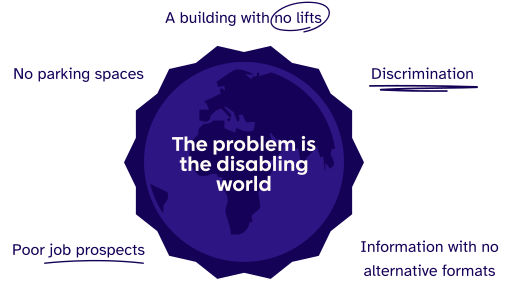
The Social Model of Disability recognises that Disabled People are disabled by barriers in society— not by our impairments, conditions or neurodivergence.
Identity First Language
We use identity-first language, such as "Disabled person”. This is because many people see their impairment, condition or neurodivergence as part of their identity and this shapes how they experience the world.
This reflects the Social Model because it focuses on the barriers Disabled people face in society.
We also respect that everyone has the right to describe themselves in the way that feels right for them. As an organisation, we aim to use language thoughtfully because words can shape how Disabled People in our community are seen and treated.
Explore what we do
Connection
Action
Voice
Lived expertise
Our history
We have roots as an organisation going back to the 1990s in different forms, BDEF is deeply embedded in Bristol’s Disabled people community.
For many years it operated as Bristol Disability Equality Forum. However, in 2024 our members voted to become a Charitable Incorporated Organisation. So, the current organisation, BDEF (Bristol Disability Equality Forum), is different and a successor to this previous organisation.
We also see our work as a continuation of the hard work done by the Avon Coalition of Disabled People which campaigned for the rights of Disabled people from 1988.
You can explore more of this history through our Disability Activism Bristol project, made in partnership with the Heritage Fund and M-Shed.